Orthopedic • Trauma • Joint Replacement • Arthroscopy Surgeon
Arthroplasty

Joint Replacement & Reconstruction

A patient-friendly guide to arthroplasty — what it is, when it may be considered, and what the process involves.

What Is Arthroplasty?

Arthroplasty is the surgical repair, reconstruction, or replacement of a joint. It is one of the most effective procedures in modern orthopedics for relieving pain and restoring function in severely damaged joints.

The word comes from arthro (joint) and plasty (to mold or reconstruct). The most common form of arthroplasty is joint replacement surgery, in which the damaged surfaces of a joint are removed and replaced with prosthetic components.

Arthroplasty is most commonly considered for joints affected by advanced arthritis that no longer respond adequately to non-surgical treatment.
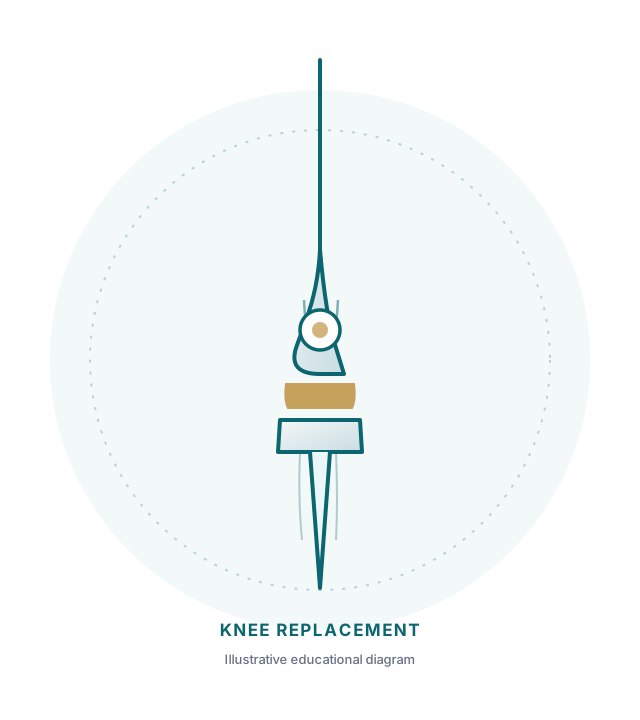
Illustrative diagram of a knee replacement
When Is It Considered?

Why Joint Replacement May Be Considered

Joint replacement is discussed when a patient experiences a combination of:

Severe Joint Damage

Advanced arthritis visible on imaging.

Persistent Pain

Pain that limits daily life despite non-surgical care.

Loss of Function

Difficulty with walking, stairs, or everyday tasks.

Failed Non-Surgical Care

When appropriate non-surgical options no longer help.

Common Procedures

Knee & Hip Replacement

Knee Replacement

The knee is the largest joint in the body. In knee replacement, the worn surfaces of the thigh bone (femur), shin bone (tibia), and often the kneecap are resurfaced with prosthetic components.

For Dr. Manish, knee replacement is practiced with a personalized approach — including caliper-aligned kinematic knee replacement — that respects each patient's individual anatomy and soft-tissue balance.

Explore Knee Replacement

Hip Replacement

The hip is a ball-and-socket joint. In hip replacement, the damaged head of the thigh bone and the worn socket surface are replaced with prosthetic components to create a smooth, pain-free joint.

Hip replacement is typically considered for advanced hip arthritis causing persistent pain and significant limitation.

Browse Hip Conditions
The Process

Evaluation Before Arthroplasty

A structured evaluation helps determine whether arthroplasty is appropriate and how it should be planned.

Detailed Consultation

Discussion of symptoms, history, activity level and goals.

Clinical Examination

Assessment of movement, stability, and joint function.

Imaging & Tests

X-rays and other appropriate investigations as needed.

Discussion & Planning

Clear explanation of findings and treatment options.

Recovery

Recovery after joint replacement is a gradual process that varies from person to person. It typically involves early guided movement, a structured physiotherapy program, and a step-by-step return to activity.

  • Early supervised movement after surgery
  • Individualized exercise and physiotherapy
  • Progressive return to daily activities

Follow-Up

Follow-up is an essential part of arthroplasty care. Scheduled reviews allow the surgical team to monitor healing, function, and progress, and to provide ongoing guidance.

  • Scheduled post-operative reviews
  • Monitoring of healing and movement
  • Long-term surveillance of the replaced joint
Recovery time and outcomes differ for every patient. Individual expectations should always be discussed with your treating surgeon.

Considering Joint Replacement?

Start with an evaluation to understand your joint and your options.

Information on this website is provided for general educational purposes and does not replace an in-person medical consultation, diagnosis, or individualized treatment plan.