Dr. Manish Pradhananga is fellowship-trained in arthroplasty and arthroscopy. His practice focuses on joint replacement, minimally invasive joint surgery, orthopedic trauma, and personalized approaches to knee arthroplasty — always within the context of an individual patient-centered evaluation.
Arthroplasty refers to surgery performed to repair, reconstruct, or replace a damaged joint. When joint surfaces are worn away by arthritis or destroyed by injury, movement can become painful and limited.
Joint replacement surgery involves removing damaged joint surfaces and replacing them with carefully designed prosthetic components to restore a smooth, functional joint.
Advanced arthritis causing persistent pain and stiffness.
Functional limitation affecting daily activities.
Reduced mobility limiting independence.
Failure of appropriate non-surgical treatment to control symptoms.
Arthroscopy is a minimally invasive technique in which a small camera is introduced into a joint through tiny incisions. This allows detailed evaluation of the joint with less tissue disruption than traditional open surgery.
In appropriate cases, arthroscopic techniques may also allow surgical treatment of certain joint problems through small incisions.
Arthroscopy is not appropriate for every patient or every condition. Suitability depends on the individual case.
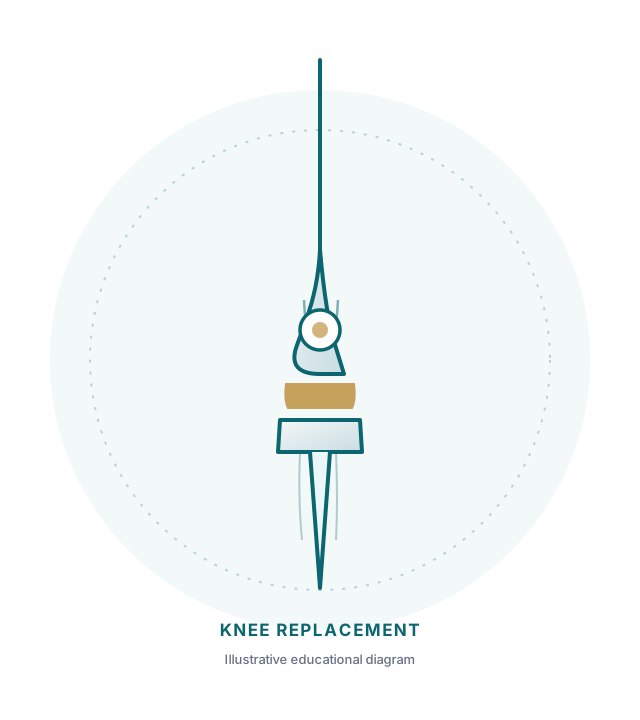
Knee replacement (knee arthroplasty) is a procedure in which damaged surfaces of the knee joint are replaced with prosthetic components. Dr. Manish emphasizes a personalized approach — planning that takes into account the individual anatomy and characteristics of each patient.
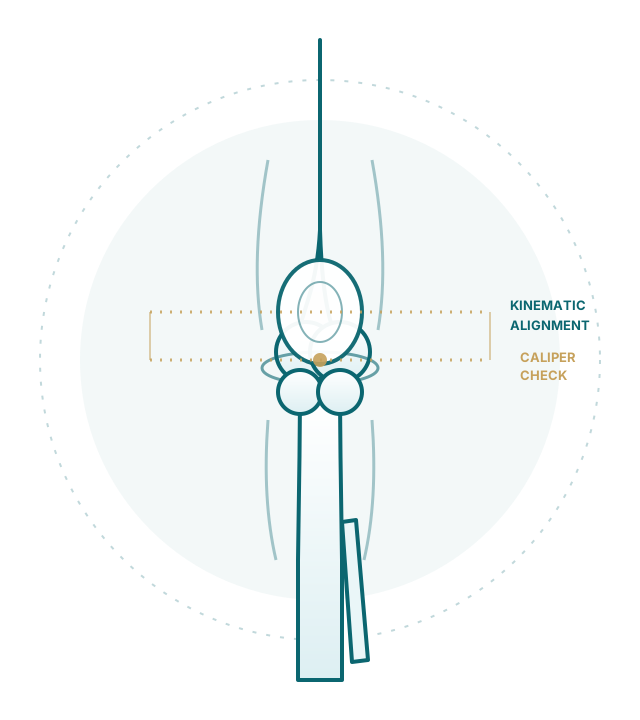
His featured surgical interest is Caliper-Aligned Kinematic Knee Replacement Surgery, an approach that focuses on respecting the patient's own joint alignment and soft-tissue balance during surgical planning.
Knee replacement is discussed only after a careful individual evaluation, and any decision is based on patient-specific circumstances.
Orthopedic trauma involves the evaluation and management of injuries to the bones, joints, and supporting structures — including fractures, dislocations, sports injuries, and accident-related injuries.
Trauma care begins with careful assessment, appropriate imaging, and a clear discussion of management options. Timely evaluation is important for the best possible outcome.
A consultation begins with understanding your symptoms and concerns. Request an appointment to discuss your situation.